Tag: DJID

  • Case Study: Does an LTE Device Need a TKDN Certificate in Indonesia?

    Our Case: An LTE Product and the TKDN Question

    One of our clients has a product with LTE/4G capability. Since Indonesia’s TKDN regulation applies to LTE/4G devices, they believed a TKDN certificate was required before the product could enter the Indonesian market. Is that really the case?

    Permenperin No. 35 of 2025: The TKDN Rulebook

    Indonesia’s Ministry of Industry signed Regulation No. 35 of 2025 on the Provisions and Procedures for TKDN and BMP Certification on 11 September 2025. It took effect on 11 December 2025, three months after promulgation (Article 75). It replaced the 14-year-old Permenperin 16/M-IND/PER/2/2011 and three related procurement guidelines (Article 74).

    Our Short Answer for the Client

    No. Their product did not need TKDN at all. To see why, we need to look at what TKDN measures, who is actually obliged to have it, and which products cannot even apply.

    What Is TKDN?

    TKDN stands for Tingkat Komponen Dalam Negeri, or local content level. It is defined as the amount of domestic content in goods, services, or a combination of goods and services. Under the regulation, the value can be calculated for three objects:

    1. Goods (Barang)
    2. Industrial services (Jasa Industri)
    3. A combination of goods and services

    A TKDN certificate is the official proof of a product’s local content value and/or BMP value. It is issued after calculation and verification by an Independent Verification Body (LVI) appointed by the Minister of Industry. BMP (Bobot Manfaat Perusahaan) is a separate credit awarded to companies that invest and produce in Indonesia.

    How TKDN for Goods Is Calculated Under Permenperin 35/2025

    The new regulation no longer calculates TKDN on total cost. Article 4 fixes three production factors with set weights.

    Production factorWeightWhen it counts in full
    Direct materials75%Main components hold certified TKDN values above 80%, or are made in Indonesia from fully domestic raw materials (Article 5)
    Direct labour10%At least 50% of direct workers are Indonesian citizens and production runs in the company’s own factory in Indonesia (Article 6)
    Factory overhead15%The company has invested in Indonesia and produces in its own factory there (Article 7)

    A main component that is not produced by an industrial company in Indonesia counts as 0% for the materials factor. Companies with active research and development can also earn an additional 20% brainware value (Article 10).

    Who Is Obliged to Comply With TKDN?

    Government Procurement Is the Main Trigger

    Permenperin 35/2025 is a calculation and certification procedure. It does not, by itself, make TKDN a condition for importing or selling a product. The obligation comes from procurement policy. Minister Agus Gumiwang Kartasasmita explained that TKDN applies to all industrial products purchased by the government, BUMN and BUMD through public procurement (PBJ). When a domestic product with a TKDN value above 40% is available, government buyers must choose it over imports. For consumer products outside procurement, displaying a TKDN value is encouraged but voluntary.

    Can a Product Be Excluded From TKDN Assessment?

    Yes. Article 9(2) lists goods for which TKDN cannot be calculated at all:

    1. Goods whose raw materials and/or components all come from imports. This is simply because there is nothing domestic to measure.
    2. Goods produced only through packing or packaging
    3. Goods produced only through painting, colouring, cutting, slicing or diluting that does not change the HS code
    4. Goods produced by disassembling components
    5. Natural goods that undergo no production process

    So, What Did We Tell the Client?

    No, they did not need a TKDN certificate, for three reasons.

    1. Not a government procurement product. The device is sold through commercial channels, not to ministries, BUMN or BUMD, so the procurement obligation does not apply.
    2. Fully manufactured abroad. Every material is produced, and the product is assembled, outside Indonesia. Under Article 9(2)(a), it could not apply for TKDN even if it wanted to.

    What the client does need is DJID certification for the LTE and other radio functions.

    Key Takeaways

    • Ask who the buyer is. Under Permenperin 35/2025, TKDN matters mainly when the product is bought through government, BUMN or BUMD procurement. Commercial retail products have no TKDN obligation.
    • Imported goods cannot be assessed. A product made entirely from imported materials and assembled abroad falls under Article 9(2)(a) and cannot receive a TKDN value.
  • Does Your Device Need SAR Testing? The 2027 DJID Guideline

    Komdigi Makes SAR Test Reports Mandatory for Selected Devices

    On 22 April 2026, Komdigi issued Ministerial Decree No. 197 of 2026, which makes SAR test reports mandatory for certain telecommunication devices certified through DJID. The decree replaces Decree 177/2024 and sets Specific Absorption Rate (SAR) limits for products used close to the human body.

    Not every device is affected, though. To know whether your product needs SAR testing, start with how DJID categorizes it.

    HKT and Non-HKT: The Two DJID Product Categories

    DJID separates telecommunication equipment into two categories, HKT and non-HKT. The category your product falls into determines whether the SAR rule applies.

    • HKT covers mobile phones (handphone), handheld computers (komputer genggam) and tablet computers (komputer tablet) that connect to cellular networks.
    • Non-HKT covers the other telecommunication equipment on the mandatory list, such as Wi-Fi routers and access points, Bluetooth audio devices, wireless keyboards and mice, smart home products and IoT modules.

    SAR Testing Is Mandatory Only for HKT Products

    SAR test reports are required only for HKT products. Within that category, the decree applies to devices that meet specific technical conditions.

    • Phones and Tablets Used Within 20 cm of the Body Above 20 mW. The requirement covers mobile phones and tablet computers used at a distance of less than 20 cm from the body with a radiated transmit power above 20 mW. In practice, most cellular phones and tablets meet both conditions.
    • Exposure Areas: Head, Torso and Limbs. SAR limits apply to the head, the torso (body) and the limbs. The test report should cover each exposure position relevant to how the device is used.
    • Reference Standard: ICNIRP 1998 or ICNIRP 2020. The limits refer to the international ICNIRP guidelines, and either the 1998 or the 2020 edition can be used.

    What If My HKT Product Is Not Used for Voice Calls?

    Tablets that are not designed for voice communication next to the ear, meaning they have no earpiece, are exempt from the head SAR assessment. Body and limb requirements still apply if the tablet meets the 20 cm and 20 mW conditions. However, the exemption is not automatic. To claim it, applicants must attach a statement letter (surat pernyataan) stating that the SAR report is not yet ready, together with the technical specifications of the device.

    SAR Testing Timeline Under the 2027 DJID Guideline

    Komdigi provides a transition period until 31 July 2027. Until that date, applicants can submit a surat keterangan in place of the SAR report if the lab is not yet ready to test the device. Once the SAR report is issued, it must be submitted to DJID no later than 14 calendar days after the issue date.

    Does DJID Accept Foreign SAR Reports?

    Not at this time. DJID currently accepts only SAR reports issued by laboratories in Indonesia, and only two labs can carry out the test: BBPPT (Balai Besar Pengujian Perangkat Telekomunikasi) and IDTH. Reports from overseas labs, including those used for FCC or CE approvals, cannot be used for DJID certification.

    What Should You Do Next?

    If the product you plan to certify is an HKT device, schedule SAR testing as early as possible. Testing takes time, and with only two labs serving the whole market, waiting lists are likely to grow as the 2027 deadline approaches. Register your product with BBPPT or IDTH early and prepare samples and technical documents in advance. Building the testing lead time into your certification plan now helps you avoid delays to your Indonesian launch.

    Key Takeaways

    • Check your DJID category first. SAR requirements apply only to HKT products.
    • Phones and tablets used within 20 cm of the body with radiated power above 20 mW need a SAR report covering the head, torso and limbs.
    • Tablets without an earpiece can be exempted from the head assessment with a statement letter and technical specifications.
    • A surat keterangan can be used until 31 July 2027, and the SAR report must reach DJID within 14 calendar days of issue.
    • Only domestic reports from BBPPT or IDTH are accepted, so plan local testing for every HKT product entering Indonesia.
    • Lab capacity, not paperwork, is likely to be the main bottleneck. Book your lab slot early.

    Source: https://bbppt.postel.go.id/news/pengumuman/keputusan-menteri-komunikasi-dan-digital-nomor-197-tahun-2026

  • Glodacert and HCT Expand Strategic Cooperation to Support Indonesia DJID Market Access

    Glodacert and HCT Expand Strategic Cooperation to Support Indonesia DJID Market Access

    Glodacert expands its long-standing cooperation with HCT to support manufacturers entering the Indonesian DJID market.

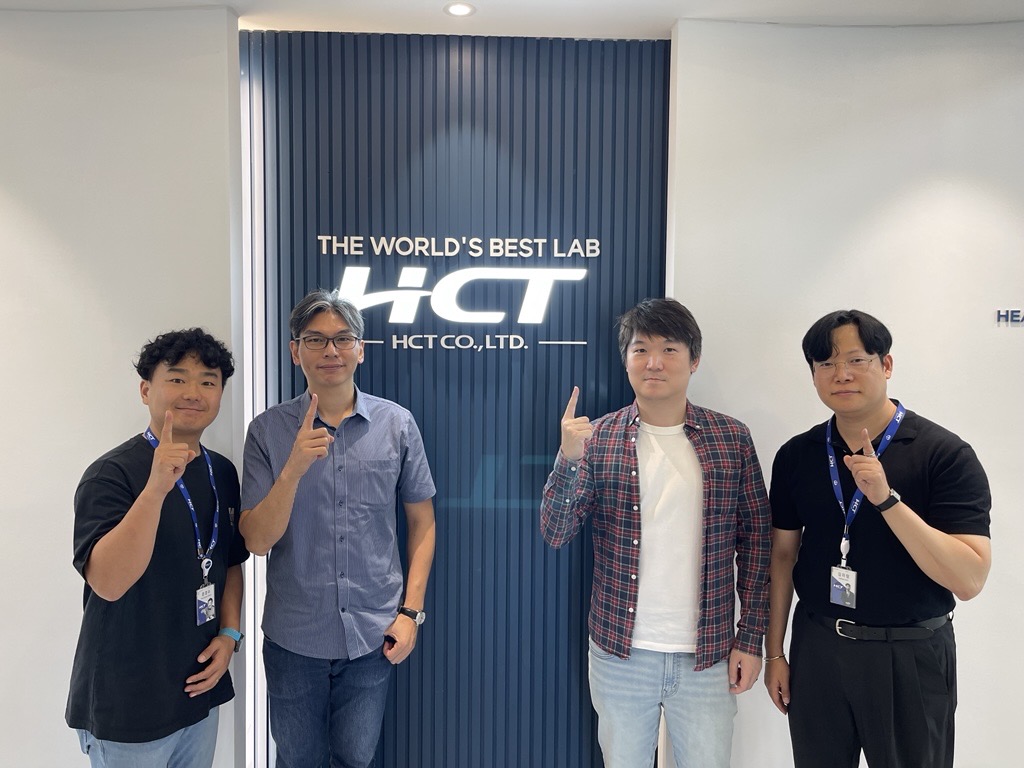
    In early September 2026, Glodacert Directors Kim and Charles visited HCT Co., Ltd. in Korea to discuss opportunities for further cooperation between the two companies across the Korean and Indonesian markets.

    HCT is one of the Korean laboratories recognized by Indonesia’s Directorate General of Digital Infrastructure (DJID) under the Mutual Recognition Arrangement (MRA), and also running a domestic laboratory in Jakarta, providing testing capabilities to support products seeking access to the Indonesian market.

    Glodacert and HCT have worked closely for many years to support manufacturers with testing and certification projects for the Korean market. Building on this established relationship, both companies are now looking to expand their cooperation into Indonesia.

    During the meeting, the Glodacert and HCT teams exchanged views on regulatory developments, local testing requirements, certification procedures, and the practical challenges manufacturers may face when entering the Indonesian market.

    With Indonesia’s regulatory framework continuing to evolve and greater emphasis being placed on recognized local and MRA testing routes, both parties see growing opportunities to combine HCT’s testing capabilities with Glodacert’s certification, regulatory, and project management expertise.

    Through closer cooperation, Glodacert and HCT aim to provide manufacturers in Taiwan, China, Korea, and other international markets with a more streamlined solution for Indonesian market access — from product testing and regulatory assessment to DJID certification and project coordination.

    The discussions also focused on preparations for 2027, as manufacturers and certification service providers adapt to upcoming changes in Indonesia’s acceptance of overseas test reports. Glodacert and HCT will continue exploring ways to strengthen their cooperation and provide customers with more efficient and competitive testing and certification solutions.

    Glodacert would like to extend its sincere appreciation to Moon, Deputy General Manager of the Technical Operation Team, and Aiden, Manager of the Global Business Team at HCT, for their warm welcome and the productive discussions.

    We look forward to deepening our cooperation with HCT and supporting more manufacturers in successfully accessing the Indonesian market in 2027 and beyond.

  • Case Study|Declined Twice? What Your DJID Inquiry Might Be Missing

    The Overlooked Documentation Gap

    A DJID inquiry getting declined once is frustrating. Getting declined back to back, on the same product, is usually a sign that something structural is being missed. It’s typically not a technical failure, but a documentation gap nobody flagged before submission. DJID type approval inquiries can be more complex than they appear when this requirement isn’t known upfront.

    Recently, The One-GDC encountered this exact issue while handling a DJID inquiry for a product using multiple frequency ranges, WLAN and Bluetooth, simultaneously. The inquiry was declined repeatedly, and the cause wasn’t the product’s compliance itself, but a missing document that most applicants don’t anticipate.

    It’s Not Just About Passing the Test

    Products with WLAN capability require the local importer to submit an additional declaration letter, a sealed statement confirming which specific frequency range the product will use once it enters the Indonesian market.

    Without this letter, the inquiry stalls, even if the technical test results themselves are fully compliant.

    This isn’t the only reason inquiries get declined. In other cases we’ve handled, submissions were rejected due to a mismatch between the technical codes written in the RF summary statement, a separate issue worth covering in its own case study.

    For products combining WLAN and Bluetooth or other capabilities, the missing declaration letter was the deciding factor between a smooth approval and a repeated back and forth cycle.

    Our Approach|Anticipating the Paperwork Before It Becomes a Problem

    Once we identified that the product’s frequency profile triggered the WLAN declaration letter requirement, the rest of the process became about coordination rather than technical troubleshooting.

    Our filing sequence for this case:

    Technical Report Review
    → Frequency Range Identification (WLAN / Bluetooth/Wifi)
    → Additional Documentation Mapping (Declaration Letter Requirement)
    → Local Importer Coordination
    → DJID Submission
    → Approval

    This meant the declaration letter was prepared and ready before submission, instead of being requested (and delaying the process) after an initial decline.

    What Our Experts Have Done When It Comes to DJID

    In practice, DJID inquiries often take longer than expected because of this exact back and forth over missing documents. From more than 40+ DJID cases that we have done in 2026, our technical team has learned to anticipate these moments in advance, reading through the reports upfront to confirm every required document is already in place.

    Because we operate through our own Indonesian branch, we communicate directly with the local importer to make sure they’re informed of any additional documents required from their end, before submission rather than after a decline.

    For us, the value of Global Market Access isn’t just knowing that a declaration letter is needed. It’s knowing which perks and technical codes apply to your specific product, and making sure the right party has the right document at the right stage of the process.

    Key Takeaway

    For products that has WLAN, the deciding factor in a clean DJID approval is often not just the test results. It’s whether the local importer has submitted the additional declaration letter confirming the product’s frequency range use in Indonesia.

    Rather than treating DJID as a single technical checkpoint, the real path is:

    1. Frequency Range Identification
    2. Additional Declaration Letter
    3. Local Importer Coordination

    Through direct coordination with our Indonesian branch and experience across 40+ DJID cases, The One-GDC helps manufacturers avoid the repeated decline cycle and move straight to approval.