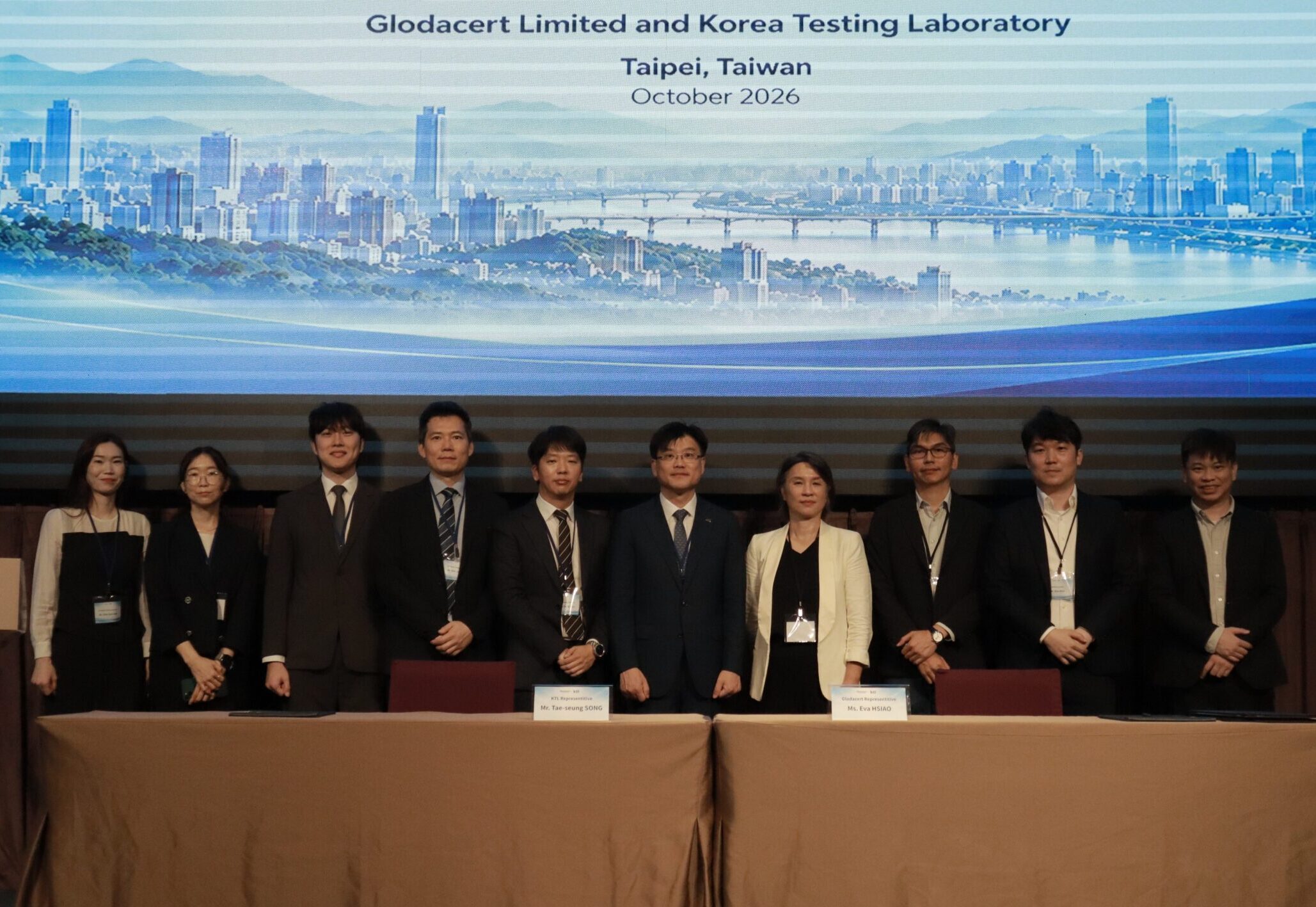
Tag: RRA

  • Glodacert 攜手 KTL 聚焦 AI Server 韓國 RRA 認證與在台測試合作

    Glodacert 攜手 KTL 聚焦 AI Server 韓國 RRA 認證與在台測試合作

    透過產業實務交流,探索更適合台灣 AI Server 廠商的韓國市場進入模式
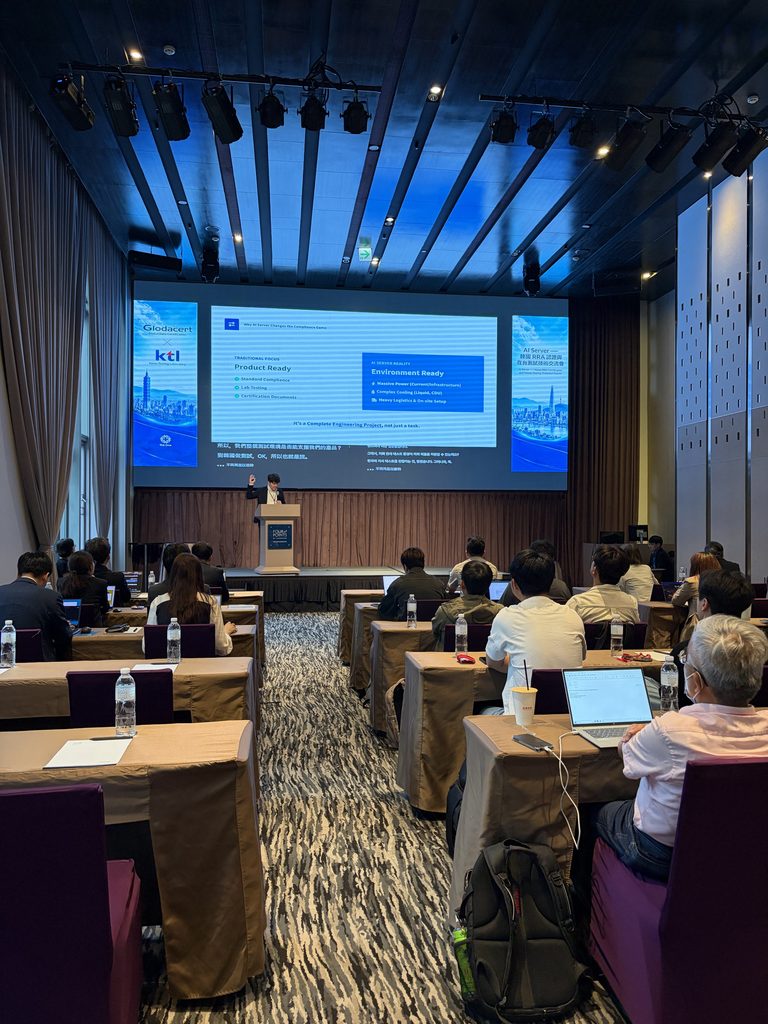
    Glodacert 於 2026 年 10 月 22 日在台灣舉辦 「AI Server 韓國 RRA 認證及在台測試交流會」,特別邀請 Korea Testing Laboratory(KTL)技術團隊來台,與台灣 AI Server 產業共同交流韓國 KC/RRA 認證、大型設備測試及在台測試等實務議題。

    本次活動邀請多家 AI Server、伺服器及 ICT 產業代表參與,包括 AMD、廣達、鴻齡(鴻海集團)、和碩、智邦及 Sanmina 等企業,共同針對大型 AI Server 進入韓國市場時所面對的認證、測試環境、運輸、液冷系統及 Witness Testing 等問題進行交流。

    Glodacert 與 KTL 均表達持續深化合作的意願,希望結合台灣 AI Server 產業的實際需求、Glodacert 在專案管理與風險規劃上的經驗,以及 KTL 在韓國測試與 RRA 認證上的技術能力,為台灣廠商建立更有效率、風險更可控的韓國測試與認證執行方式。

    AI Server 大型化,認證問題已延伸至整體測試環境
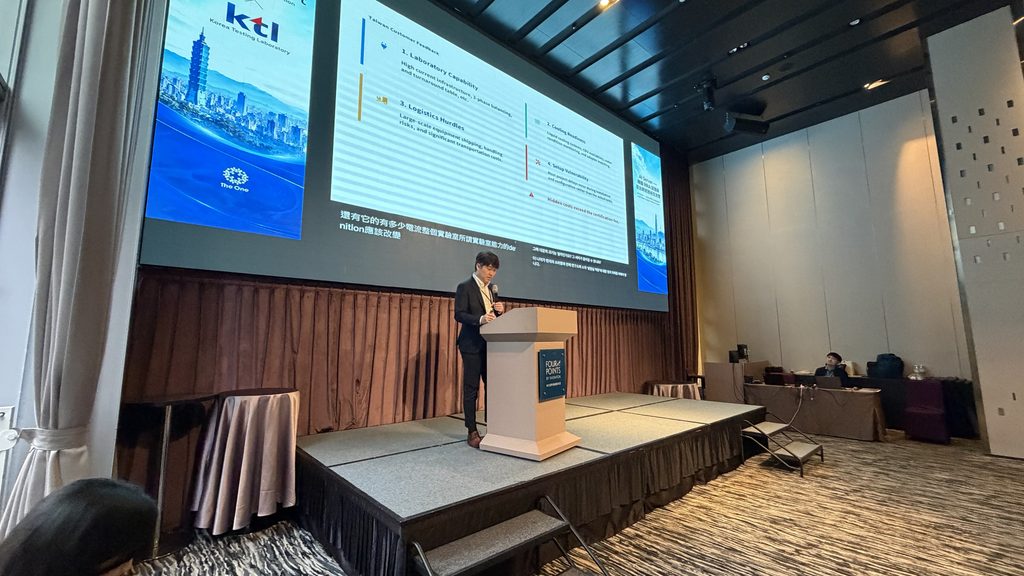
    Glodacert Director, Kim表示:台灣是全球 AI Server 設計與製造的重要基地,但隨著產品規格的發展,產品進入韓國市場時面對更多挑戰。

    台灣是全球 AI Server 設計與製造的重要基地。

    隨著新一代 AI Server 持續朝高功率、高電流、大型 Rack 及 Liquid Cooling 架構發展,產品進入韓國市場時所面對的挑戰,已逐漸從單純的法規符合性,延伸至實驗室電力能力、Cooling System、CDU、設備運輸、現場 Setup、測試配置及工程支援等層面。

    對大型 AI Server 而言,測試與認證的風險已不只來自產品本身能否符合標準。

    實驗室是否具備足夠的供電能力、Liquid Cooling 系統是否能順利配置、設備是否可以安全運送,以及產品與實驗室雙方是否在測試前完成充分準備,都可能直接影響整體專案的成本與時程。

    因此,Glodacert 與 KTL 在本次交流中,將討論重點放在如何把更多問題提前至正式送測前處理,降低大型、高價 AI Server 在跨境測試過程中的不確定性。

    從 Certification Fee 進一步評估 Total Project Cost

    Glodacert 在活動中分享近期台灣 AI Server 案件所累積的實務觀察,包括 Power、Cooling、Transportation、Setup 及 Configuration Management 等問題。

    Glodacert 認為,未來規劃 AI Server 韓國認證時,不應只比較單一的 Certification Fee,而應以 Total Project Cost 作為評估基礎。

    除了測試費用以外,還應一併考慮設備運輸、報關與 Handling、特殊 Fixture、CDU、Adapter、工程人員支援、現場 Setup、重新測試以及專案延誤風險。

    對大型 AI Server 而言,測試費較低的方案,未必代表整體專案成本較低。

    因此,Glodacert 未來希望協助客戶從產品架構與實際測試需求出發,找出在成本、時程與風險之間更合理的 Korea Market Entry Route。

    建立 Pre-shipment Readiness Check,將問題提前處理
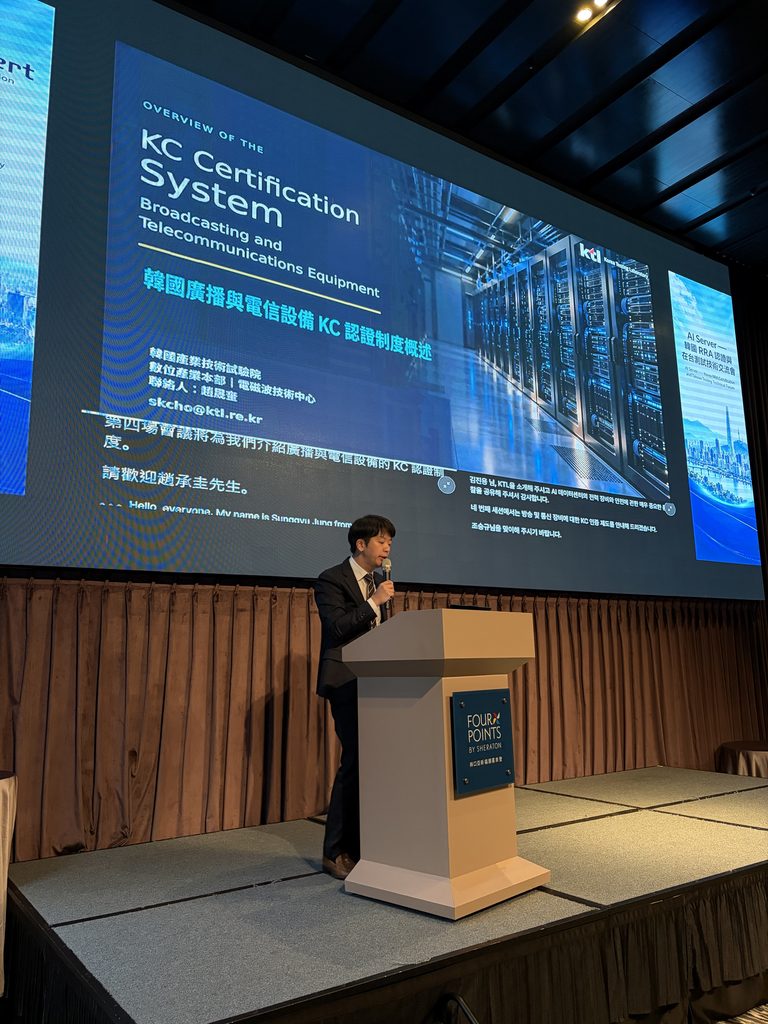
    Director of KTL EMC Center, Mr. SK Cho on KC certifiction

    本次交流中,KTL 亦分享大型 AI Server 在正式送往韓國測試前,實驗室希望提前取得的相關資訊,包括既有 CE/FCC 測試資料、Test SOP、各 Port 的啟用方式、System Configuration、設備尺寸、重量、Power 與 Cooling Requirement 等。

    這些資訊可協助 KTL 在設備出貨前,先確認測試環境是否足以支援產品。

    因此,Glodacert 未來也希望逐步建立 Pre-shipment Readiness Check 的工作模式。

    未來確認的重點將不只停留在:

    「Sample Ready 了沒有?」

    而是進一步確認:

    「整個 Testing Configuration Ready 了沒有?」
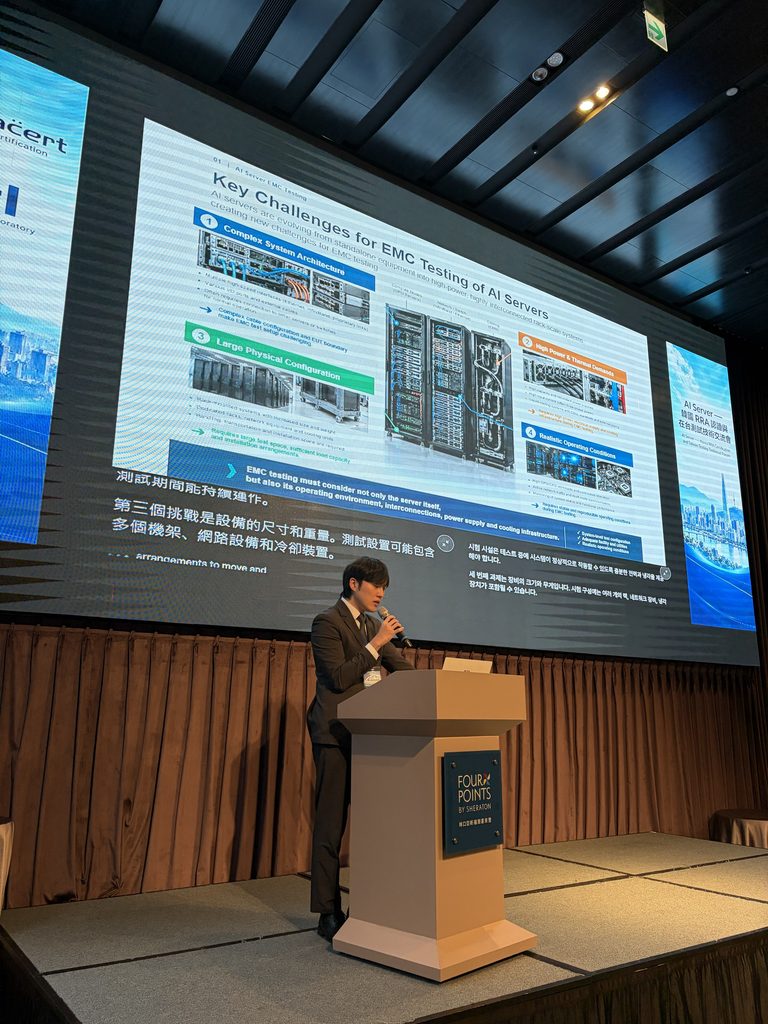
    透過產品正式出貨前的 Pre-review,可提前處理 Power、Cooling、Connector、Test SOP、Auxiliary Equipment 或 Operating Method 等問題,降低設備抵達韓國後才重新 Setup、補設備或安排工程人員再次出差所造成的風險。

    Witness Testing 成為台灣 AI Server 廠商高度關注議題

    本次交流中,我們特設了座談的環節,把客戶的一些問題帶進去生動的討論之中。其中Witness Testing 是現場 AI Server 廠商最關注的議題之一。
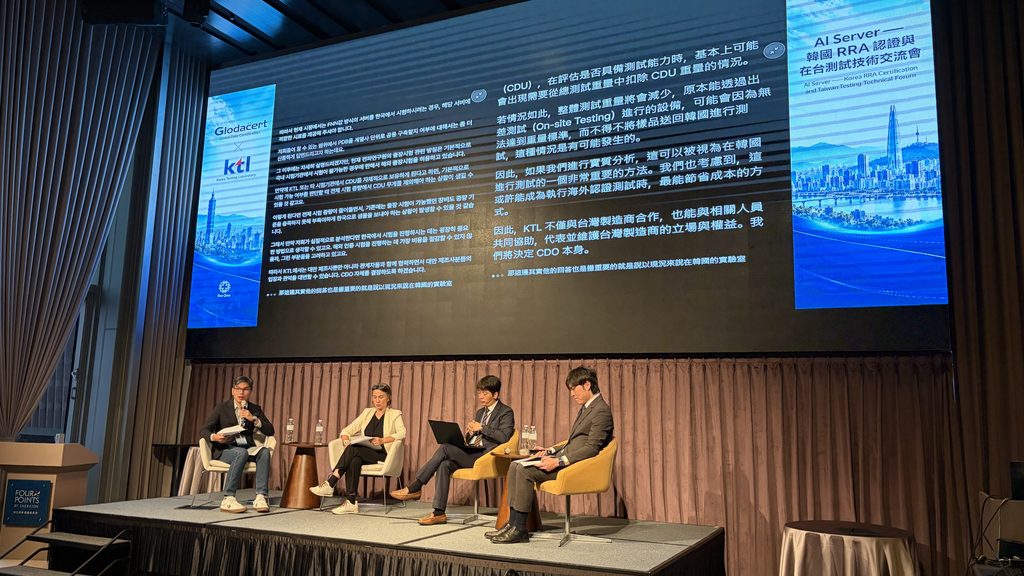
    Glodacert 與KTL 針對客戶的疑問進行座談,使客戶從對話中得到相關資訊。

    隨著 AI Server 的重量、功率與系統規模持續增加,將完整設備跨境運送至韓國實驗室進行測試,所涉及的物流成本、設備風險、工程支援及 Setup 複雜度亦持續提高。

    KTL 於交流會中說明目前 Witness Testing 在韓國 RRA 架構下的實際執行條件,以及 KTL、台灣當地實驗室與 Manufacturer 在測試過程中的角色與責任。

    對台灣廠商而言,如果未來能在符合 RRA 法規及實驗室要求的前提下,更有效運用 Witness Testing 或其他適合大型設備的測試模式,將有機會降低大型 AI Server 跨境送測的負擔。

    Glodacert 與 KTL 亦希望持續針對相關實務案件進行合作,逐步累積大型 AI Server 在台測試的執行經驗。

    從 L10、L11 到產品生命週期的認證策略

    除了測試地點以外,本次交流亦涵蓋 AI Server 韓國 KC 認證中的 L10 與 L11 選擇,以及後續 Component Change Management。

    AI Server 的 SSD、RAM、NIC、PSU、FPGA Card 等模組,在產品生命週期內經常發生變更。

    因此,首次認證時所選擇的產品 Configuration,以及採用 L10 或 L11 的管理方式,都可能直接影響後續產品變更的彈性與重新測試需求。

    Glodacert 希望將這類認證策略提前至產品架構與市場進入規劃階段,協助客戶在首次認證時,就同步考慮後續產品生命週期的變更管理與認證成本。

    將台灣 AI Server 的共同需求帶進韓國認證討論

    本次活動亦特別安排 Customer Dialogue,由台灣 AI Server 產業代表直接提出實際專案中遇到的問題,再由 KTL 從韓國實驗室與 RRA 認證實務角度回應。

    從現場包括 AMD、廣達、鴻齡(鴻海集團)、和碩、智邦及 Sanmina 等產業代表的交流可以看到,不同 AI Server 廠商所面對的問題具有高度共通性。

    大型設備運輸、高功率供電、Liquid Cooling、CDU、Witness Testing、L10/L11、Component Change,以及測試場地與工程支援等,均已逐漸成為 AI Server 進入韓國市場時需要共同面對的產業議題。

    Glodacert 與 KTL 希望未來能持續整理實際案件中的共通需求與技術問題,透過更多 Project Evidence 與產業回饋,讓韓國測試及認證體系更充分了解台灣大型 AI Server 在實際執行上的需求。

    建立台灣與韓國之間更有效率的 AI Server 認證橋樑

    本次「AI Server 韓國 RRA 認證及在台測試交流會」所呈現的核心方向十分明確:

    未來 AI Server 的 Testing and Certification,需要更早期的技術規劃、更完整的測試環境確認,以及更緊密的跨國合作。

    Glodacert 將持續結合台灣 AI Server 廠商的產品與專案需求,以及自身在專案管理、風險規劃、跨國認證與客戶端技術溝通上的經驗;KTL 則提供韓國測試能力、KC/RRA 認證經驗及與韓國主管機關長期累積的技術經驗。

    未來雙方希望持續探索 Pre-assessment、Pre-shipment Review、Witness Testing、大型 AI Server Testing Configuration,以及其他符合韓國法規要求的測試合作模式。

    Glodacert 希望透過與 KTL 的長期合作,協助台灣 AI Server 廠商更早掌握韓國測試條件、更有效控制專案成本與風險,並建立更具可預測性的 Korea Market Entry Route。

    隨著 AI Server 持續大型化與系統化,測試與認證模式也需要同步演進。
    Glodacert 與 KTL 將持續以實際案件、產業需求與技術交流為基礎,共同探索更適合台灣 AI Server 產業的韓國測試與認證合作模式。

  • Case Study | Does Your Server’s KC RRA Still Apply After a Hardware Change?

    Does a New Server Configuration Means a New KC RRA Assessment?

    With the rapid global growth of AI applications, large computing equipment such as AI servers, GPU servers, IT racks and liquid-cooled servers is becoming an important product category in the data center market.

    In our Korean KC RRA projects over the past two years, we have clearly seen a steady rise in EMC certification demand for large servers and rack systems.

    However, the nature of AI servers also brings new challenges to certification work.

    The equipment keeps getting bigger and heavier, which raises the logistics cost and transport risk of shipping a complete system to an overseas lab for testing. So a very common question from server manufacturers is:

    “The whole server already has KC RRA. If we later just swap the SSD, NIC, add-on card or FPGA card, do we need to test again?”

    The answer can’t be decided simply by asking whether the part’s model number has changed.

    The client’s intuition: same model, same ID, so it should carry over?

    We recently handled a real case like this.

    One of the client’s FPGA add-on cards had already completed Korean KC RRA EMC assessment as part of an air-cooled L10 server system.

    As liquid cooling becomes one of the mainstream designs for AI servers, the client wanted to offer the exact same FPGA card model as an optional part in a new liquid-cooled server system.

    For the FPGA card itself:

    • The model name had not changed
    • The PCB design had not changed
    • The function had not changed
    • It had already appeared in an approved server configuration

    So the client asked a very reasonable question:

    “Since it’s the same card, and it has already been used in another KC RRA server system, we shouldn’t need to retest, right?”

    This is also one of the most common certification misconceptions among server manufacturers.

    Same Part ≠ Same EMC Configuration

    Korea’s RRA conformity assessment is not just a check of a card’s part number.

    What actually has to be confirmed is this: when the part is used in the configuration of the product as actually sold, does the equipment as a whole still meet Korea’s EMC technical requirements?

    Even when an air-cooled server and a liquid-cooled server use the same FPGA card, their actual EMC environments can be completely different. For example:

    Assessment itemAir-cooled systemLiquid-cooled system
    Chassis designAirflow-oriented chassisChassis optimized for liquid cooling
    Cooling componentsFans / fan controllerPump / CDU / liquid cooling controller
    Power configurationOriginal air-cooling PSU loadDifferent power loading conditions
    Cable routingOriginal cable layoutCooling pipes and cables rearranged
    Grounding / bondingOriginal mechanical grounding layoutMechanical structure may differ
    FPGA installation positionOriginal slot / positionSlot, riser or mounting position may change
    System loadingOriginal server configurationGPU / accelerator density may be higher
    EMI environmentOriginal EMC configurationNew internal noise environment

    So even if the FPGA card itself is identical, once it is installed in a different server architecture, the original test results do not automatically extend to the new configuration.

    Korea’s RRA Focuses on Configuration Changes

    RRA has clear management requirements for changes to products that have already completed conformity assessment.

    Changes involving, for example:

    • Circuit changes
    • Component replacement
    • Component addition
    • Parts addition
    • Optional configurations

    may all be treated as changes related to the conformity assessment technical requirements, so it has to be confirmed whether they affect the original test results.

    Therefore:

    • Same model name ≠ automatically covered
    • Same KC ID ≠ all future configurations automatically covered

    Whether additional testing is needed still comes back to the actual hardware configuration and the coverage of the original KC RRA test report.

    Does that mean the whole server must be retested every time an SSD, NIC or add-on card changes?

    No. This is exactly where AI server KC RRA projects need the most professional judgment. RRA itself allows some changes to skip a full retest when specific conditions are met.

    For example, the RRA FAQ states that in certain computer component replacement scenarios, if the replacement is a component that has already completed conformity assessment and has equivalent function, it may be handled through the change procedure instead of a full new certification.

    RRA’s 2026 regulatory revision simplifies this further in the same direction, allowing qualifying components with the same function that have already completed conformity assessment to be handled as a change in some cases, without additional testing.

    So the real question is not: “Did this card have KC before?”. It should be: “In the new server configuration, does this card still fall within the technical coverage of the original KC RRA assessment?”

    What happened in our case?

    Back to our FPGA card case. The card model stayed exactly the same, but the server changed from air cooling to liquid cooling. That switch brings a different system configuration and different operating conditions from the air-cooled L10 system that was originally assessed.

    So we could not decide, based only on “the FPGA card model is the same,” that the air-cooled server’s KC RRA assessment results could be used directly.

    We needed to re-examine:

    • The configuration in the original KC RRA test report
    • The FPGA card’s original installation position
    • The hardware architecture of the liquid-cooled system
    • The PSU, GPU, accelerators and other high-speed components
    • Cable routing and grounding
    • The new electronics added by the cooling system, such as the pump and controller
    • The worst-case EMC operating mode
    • Whether the original test configuration is enough to represent the new liquid-cooled system

    After the configuration assessment, if the new liquid-cooled configuration goes beyond the representative / worst-case coverage of the original report, the affected KC RRA EMC items need additional testing or re-assessment. You can’t simply rely on the existing KC ID.

    A Configuration Change Doesn’t Always Require a Full Retest

    This is also the most important cost-control concept for large AI server projects. When a configuration changes, the first step should be a Regulatory Impact Assessment, not immediately scheduling a full retest. By comparing the original certified configuration with the new shipping configuration, you can first determine which outcome applies:

    • No impact: The change is already covered by the original test report, so the existing certification still applies.
    • Minor change: The change needs to be reported to RRA, and the documents or registration are updated, but no new testing is required.
    • Major configuration change: The change goes beyond the original report’s coverage, so additional testing or a new conformity assessment is needed.

    That way you meet Korea’s RRA requirements while cutting the cost of repeatedly shipping and testing large servers.