Glodacert and KTL Discuss AI Server Korea RRA Certification and Testing in Taiwan
Exploring a practical Korea market entry route for Taiwan’s AI server manufacturers
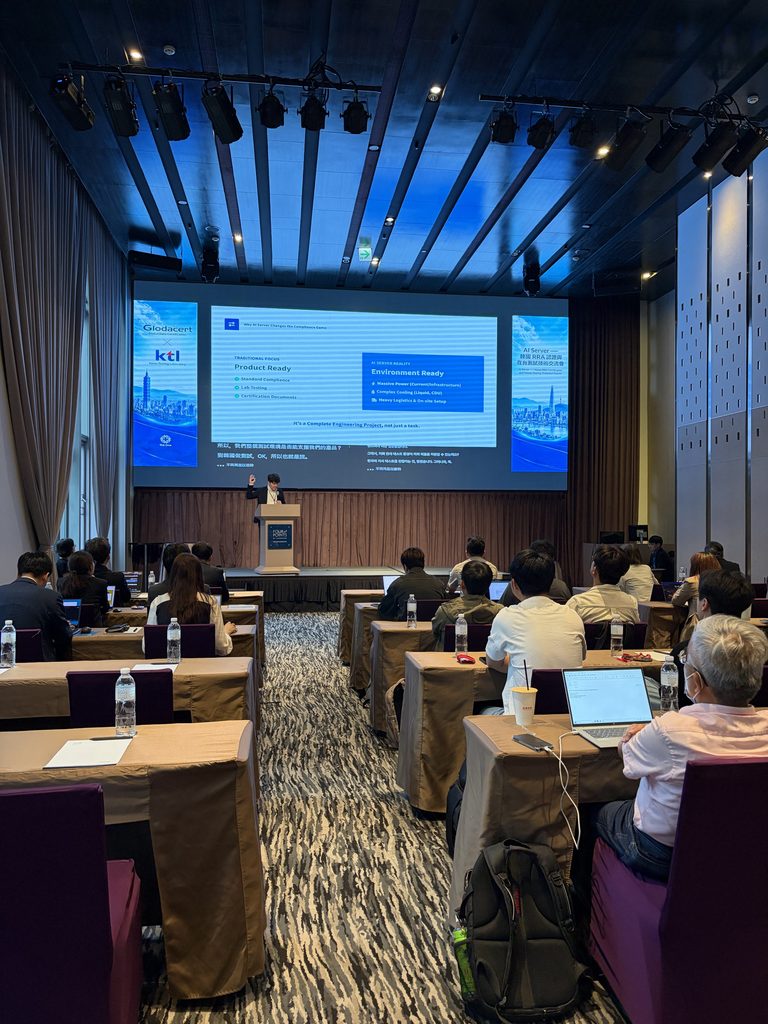
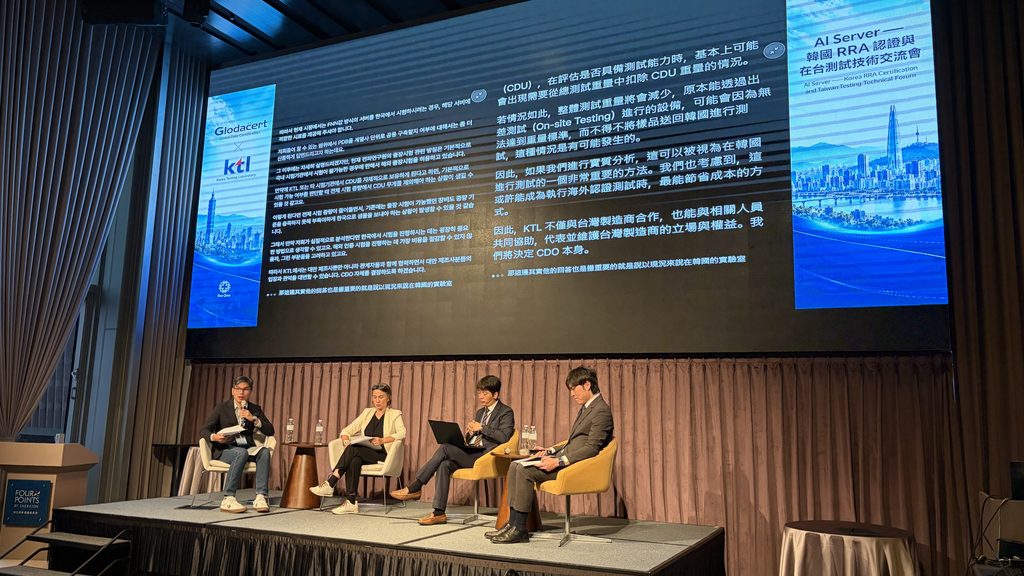
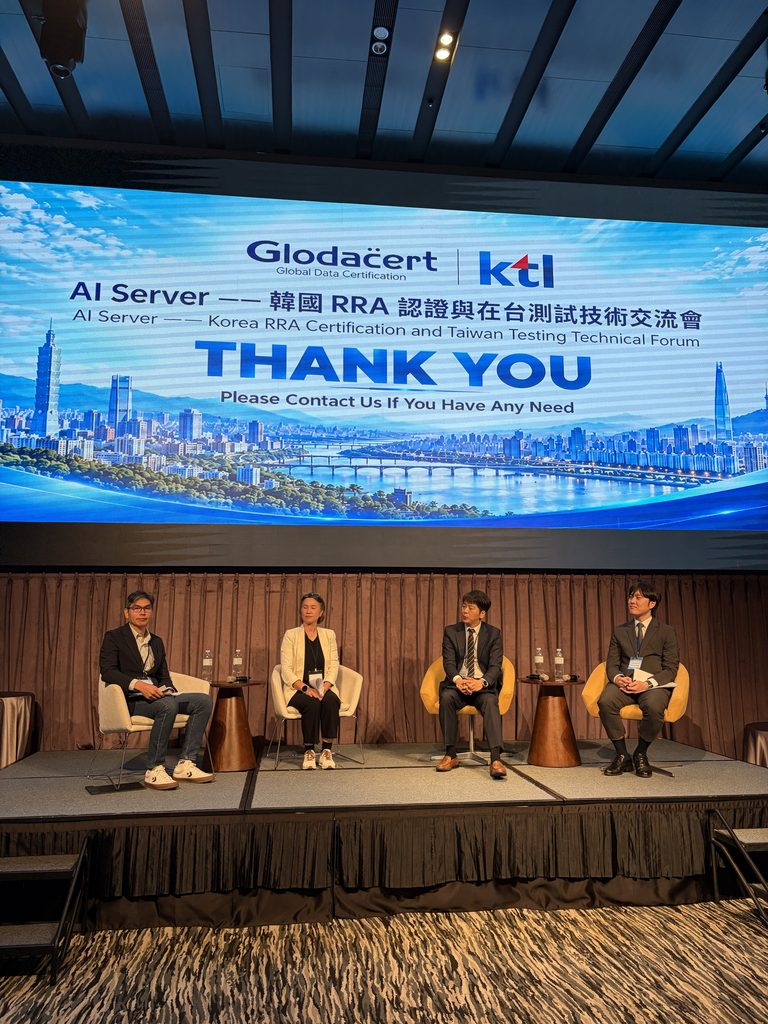
On 22 October 2026, Glodacert held an exchange in Taiwan on AI Server Korea RRA Certification and Testing in Taiwan. The technical team from Korea Testing Laboratory (KTL) joined Taiwan’s AI server industry to discuss Korea KC/RRA certification, large-equipment testing and practical testing arrangements in Taiwan.
Participants included representatives from AI server, server and ICT companies such as AMD, Quanta, 鴻齡 (Foxconn Group), Pegatron, Accton and Sanmina. Discussions covered certification, laboratory conditions, transportation, liquid cooling and witness testing for large AI servers entering Korea.
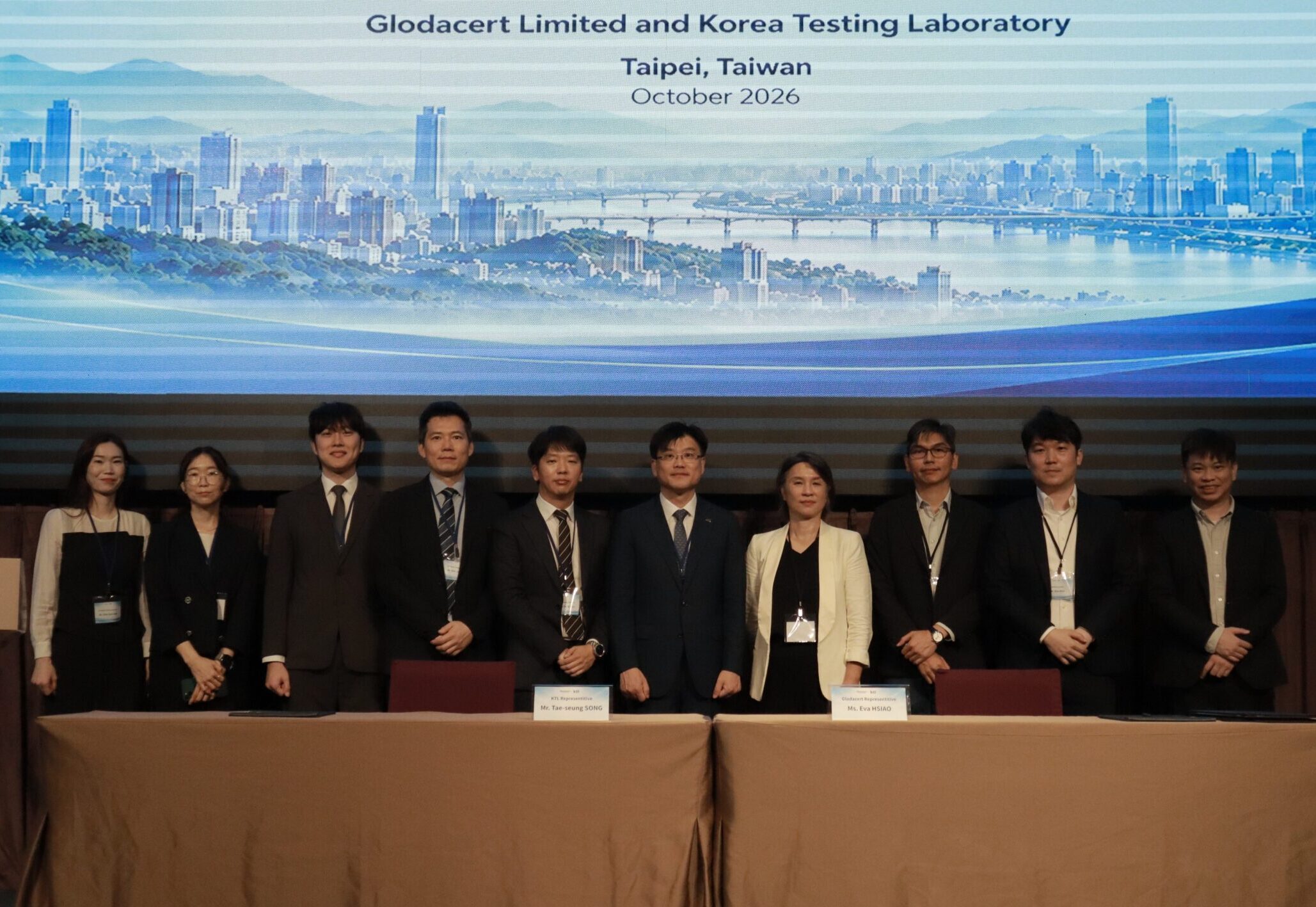
Glodacert and KTL expressed their interest in deepening cooperation. The aim is to combine Taiwan manufacturers’ practical needs, Glodacert’s project management and risk planning experience, and KTL’s Korean testing and RRA expertise to develop more efficient and manageable project arrangements.
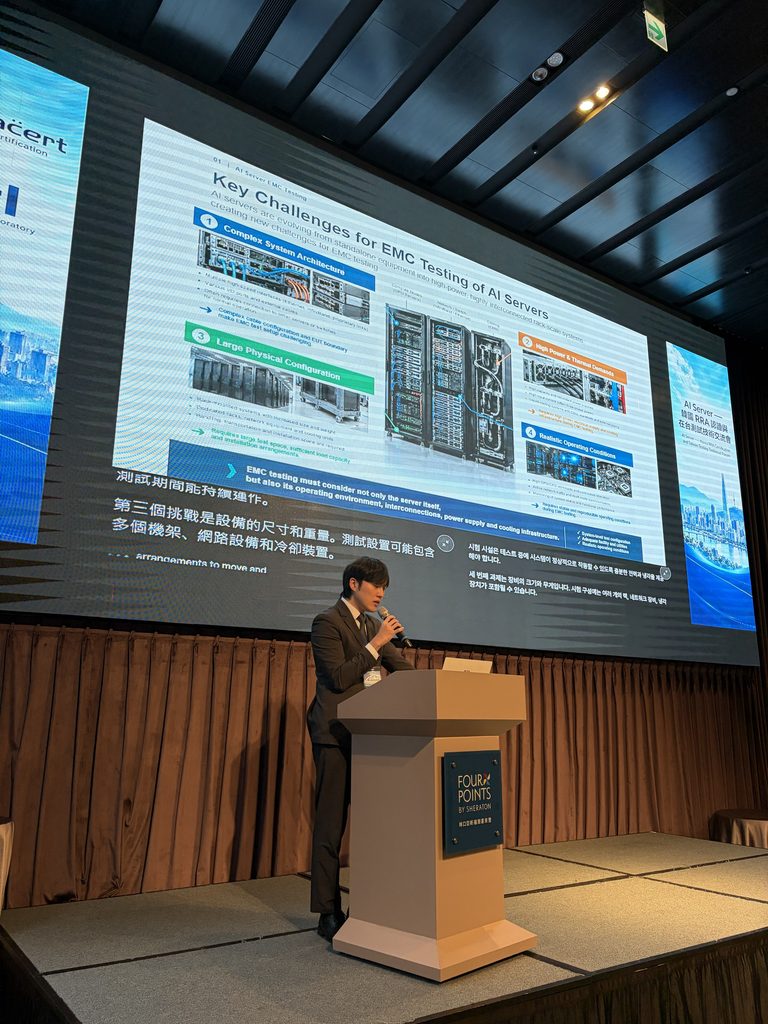
Larger AI servers require a complete testing environment
Glodacert Director Kim noted that Taiwan is a major global base for AI server design and manufacturing, while evolving product specifications bring more challenges for Korean market access.
As systems move toward high power, high current, large racks and liquid cooling, planning extends beyond product compliance to laboratory power capacity, cooling systems, CDU arrangements, transportation, on-site setup, test configuration and engineering support.
For large AI servers, project risk is no longer limited to whether the product meets a standard. Adequate electrical supply, a workable liquid-cooling setup, safe transportation and preparation by both the manufacturer and laboratory can directly affect cost and schedule.
Glodacert and KTL therefore focused on resolving more issues before formal testing, reducing uncertainty when large, high-value systems are tested across borders.
From certification fee to total project cost
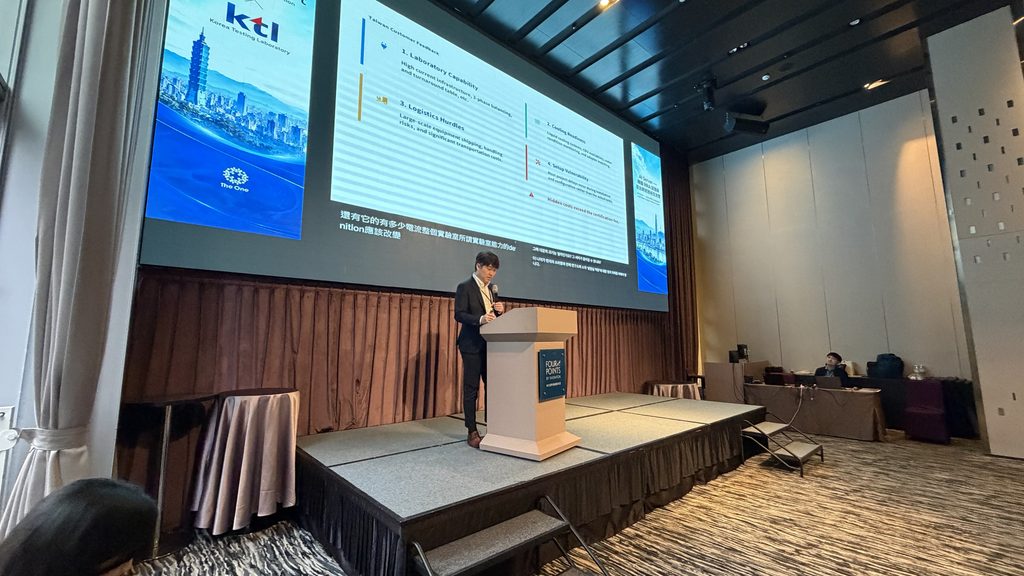
Glodacert shared observations from recent Taiwan AI server projects, including power, cooling, transportation, setup and configuration management.
Planning should consider total project cost, rather than comparing certification fees alone. In addition to test charges, the review should cover shipping, customs and handling, special fixtures, CDUs, adapters, engineering support, on-site setup, retesting and the risk of delay.
A lower testing fee does not necessarily produce a lower total project cost. Glodacert aims to help customers identify a suitable Korea market entry route by balancing product architecture and test needs against cost, schedule and risk.
Establishing a pre-shipment readiness check
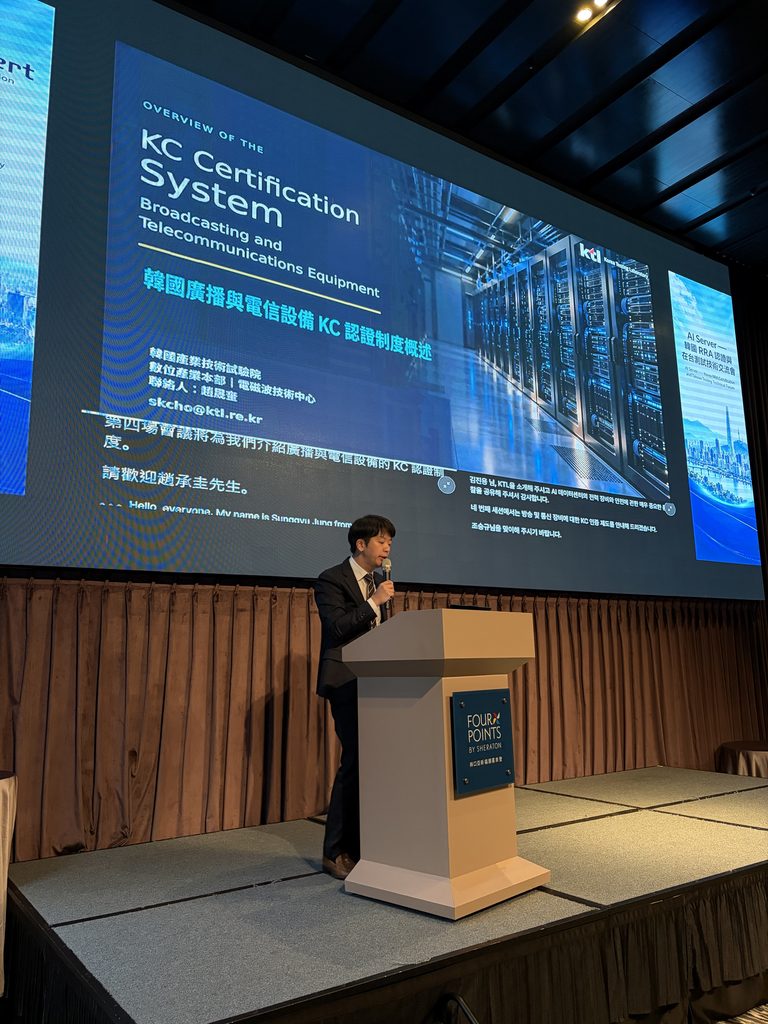
KTL EMC Center Director Mr. SK Cho shared perspectives on KC certification. KTL also discussed information the laboratory would like to review before large AI servers are shipped to Korea: existing CE/FCC data, test SOPs, port activation methods, system configuration, equipment dimensions and weight, and power and cooling requirements.
This information helps the laboratory confirm that its environment can support the product before shipment. Glodacert hopes to develop a pre-shipment readiness check that moves beyond asking, “Is the sample ready?” to asking, “Is the complete testing configuration ready?”
A pre-review can address power, cooling, connectors, test SOPs, auxiliary equipment and operating methods before dispatch. It helps reduce the risk of reconfiguring equipment, sourcing additional items or sending engineers overseas again after the system arrives in Korea.
Witness testing draws strong interest from Taiwan manufacturers
The event included a discussion session built around customer questions. Witness testing was among the topics that attracted the greatest interest, with Glodacert and KTL responding directly to participants’ concerns.
As weight, power and system scale increase, shipping complete AI servers to Korean laboratories involves growing logistics costs, equipment risks, engineering demands and setup complexity.
KTL explained the practical conditions for witness testing under Korea’s RRA framework, together with the roles and responsibilities of KTL, the Taiwan laboratory and the manufacturer.
If witness testing or another suitable large-equipment testing model can be used in compliance with RRA rules and laboratory requirements, it may help reduce the burden of cross-border shipment. Glodacert and KTL hope to continue working on practical cases and accumulate experience with AI server testing in Taiwan.
L10, L11 and certification across the product lifecycle
The exchange also covered L10 and L11 choices in Korea KC projects and subsequent component change management.
Modules such as SSDs, RAM, NICs, PSUs and FPGA cards often change during an AI server’s lifecycle. The configuration selected for the first assessment and the L10 or L11 management approach can affect later flexibility and retesting needs.
Glodacert aims to bring these decisions into the product architecture and market entry planning stages, so customers can consider lifecycle changes and certification costs when the initial project is scoped.
Bringing shared industry needs into Korea certification discussions
During the customer dialogue, Taiwan industry representatives raised issues from actual projects, and KTL responded from the perspective of Korean laboratory work and RRA practice.
Exchanges with AMD, Quanta, 鴻齡 (Foxconn Group), Pegatron, Accton and Sanmina showed that different AI server manufacturers face many common issues. Large-equipment transportation, high-power supply, liquid cooling, CDUs, witness testing, L10/L11 choices, component changes, test sites and engineering support are increasingly shared industry concerns.
Glodacert and KTL hope to continue collecting common needs and technical questions from real projects. More project evidence and industry feedback can help Korea’s testing and certification community better understand the practical execution needs of Taiwan’s large AI server systems.
Building a more efficient AI server certification bridge between Taiwan and Korea
The exchange highlighted a clear direction: AI server testing and certification need earlier technical planning, more complete checks of the test environment and closer cross-border cooperation.
Glodacert brings manufacturers’ product and project needs together with experience in project management, risk planning, international certification and customer-side technical communication. KTL contributes Korean testing capabilities, KC/RRA experience and technical experience developed through long-term work with the Korean authorities.
Both parties hope to continue exploring pre-assessment, pre-shipment review, witness testing, large AI server testing configurations and other cooperation models that meet Korean regulatory requirements.
Through long-term cooperation with KTL, Glodacert aims to help Taiwan manufacturers understand Korean testing conditions earlier, better control project costs and risks, and build a more predictable Korea market entry route.
As AI servers become larger and more integrated, testing and certification models also need to evolve. Glodacert and KTL will continue exploring suitable cooperation through practical projects, industry needs and technical exchanges.